
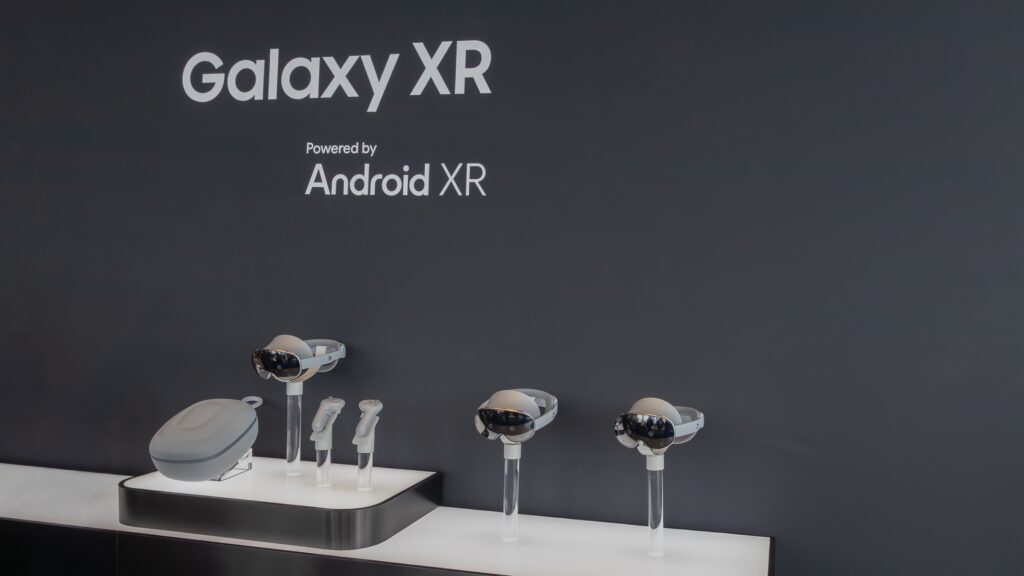
The Samsung Galaxy XR is setting a bold new standard for extended reality devices, blending cutting-edge hardware with next-gen software to deliver immersive mixed-reality experiences. This comprehensive review of the Galaxy XR explores its standout features, specs, pricing, market positioning, and what it means for the future of XR tech.
Why the Galaxy XR Matters
The focus keyword “Samsung Galaxy XR” stands at the core of Samsung’s vision to expand beyond smartphones — to a full XR ecosystem. Leveraging collaboration with Google (via Android XR) and Qualcomm (Snapdragon XR2+ Gen 2), the device aims to bring both mixed reality (MR) and premium AR/VR experiences into the mainstream.
With consumers now exploring more immersive experiences, the Galaxy XR marks Samsung’s first major push into the wearable XR category with serious hardware and software credibility.
Standout Features and Specifications
Here’s a detailed specs overview of the Galaxy XR, showcasing its major components and capabilities:
| Feature | Specification Details |
|---|---|
| Platform | Snapdragon XR2+ Gen 2 chipset |
| Display | Dual Micro-OLED 3,552 × 3,840 resolution per eye (~29 m pixels) |
| Refresh Rate / Field of View | Up to 90 Hz, 109° H × 100° V field of view |
| Memory / Storage | 16 GB RAM, 256 GB storage |
| Weight | Approx. 545 grams including head mount; external battery pack |
| Battery Life | Up to ~2 hours general use, ~2.5 hours video playback |
| Price (US Launch) | US $1,799 (~₹1.5 lakh) |
The Samsung Galaxy XR clearly pushes hardware boundaries in XR, offering high-fidelity displays, fluent performance, and an ecosystem aiming to bring real-world and virtual experiences closer together.
Design & User Experience
The Galaxy XR’s design focuses on comfort and practicality. At ~545 grams, it’s markedly lighter than many rival headsets, making longer sessions more manageable. The inclusion of an external battery pack helps distribute weight and reduce strain on the head strap.
Eye‐tracking, hand‐tracking, and gesture support are robust. The headset uses pass-through video to alternate between the real world and immersive digital content. Users can engage with Android apps in a virtual space or overlay digital interfaces onto real environments.
Integration with Gemini AI and Android XR means voice commands, spatial search (“Circle to Search”), and immersive 3D apps like Google Maps and YouTube are part of the experience.
What Sets It Apart
- Strong Hardware Specs: Dual-4K micro-OLED displays and premier chipset rivaling top PCs.
- Open XR Platform: Running Android XR gives it access to thousands of apps, unlike closed ecosystems.
- Competitive Pricing: At ~$1,799 it undercuts more premium headsets while delivering top-tier specs.
- Emerging Ecosystem: Samsung is positioning the Galaxy XR as the first step toward a broader XR family (smart glasses, tri-fold phones, etc.).
Potential Overlooked Areas
- Battery Life: While improved, 2–2.5 hours may limit full-day use.
- Accessory Costs: Controllers and travel case sold separately, raising total cost.
- Niche Market: XR headsets remain an emerging category; everyday use-cases still evolving.
- Demanding Specs: Requires space and possibly external battery – less ideal for casual use.
Social Buzz: What People Are Saying
The announcement of the Samsung Galaxy XR has sparked substantial conversation online, especially around its pricing, hardware, and position against Apple’s Vision Pro.
This buzz reflects strong anticipation among tech-enthusiasts, developers and early adopters alike.
Market Impact & What It Means for Samsung
The launch of the Samsung Galaxy XR is strategic. It signals Samsung’s ambition to dominate not just smartphones, but immersive devices and ecosystems. With Android XR, Samsung and Google aim to shape how we interact with digital content in future spaces.
By offering high spec with relatively affordable pricing compared to headsets like Apple Vision Pro, Samsung could accelerate XR adoption globally. As XR hardware costs decline and software ecosystems mature, Galaxy XR could become the “entry point” for mixed-reality consumer experience.
Final Verdict
For anyone seeking premiumXR hardware today, the Samsung Galaxy XR represents one of the most complete packages: advanced displays, elite processing power, open platform, and practical design. While battery limitations and accessory costs exist, the headset’s strengths far outweigh them for serious users.
If you’re ready to jump into immersive reality and future-proof your device lineup, the Samsung Galaxy XR is worth serious consideration.
Also read:
OnePlus 13: The Next-Gen Flagship Redefining Smartphone Innovation in 2025
Oppo Find X8: The Next-Gen Flagship Smartphone Redefining Innovation in 2025
Arattai – India’s Homegrown Messaging App With 3.5 Lac Downloads Revolutionizing Digital Communication